
 ES
ES  EN
EN  FR
FR 
Pneumatic bulk solids conveying refers to any material handling system in which bulk solids are transported through a pipeline using only a pressurized gas—typically air—as the conveying medium.
Pneumatic conveying is one of the most widely used and efficient solutions for bulk solids handling, easily integrating with storage, conveying, dosing and weighing systems while providing a clean, safe and fully automated process.
This technology can be applied across a wide range of industries and production processes, including mineral processing, cement and construction materials manufacturing, the chemical, food, plastics, pharmaceutical and cosmetics industries, as well as any application requiring the efficient conveying of powders or granular materials.
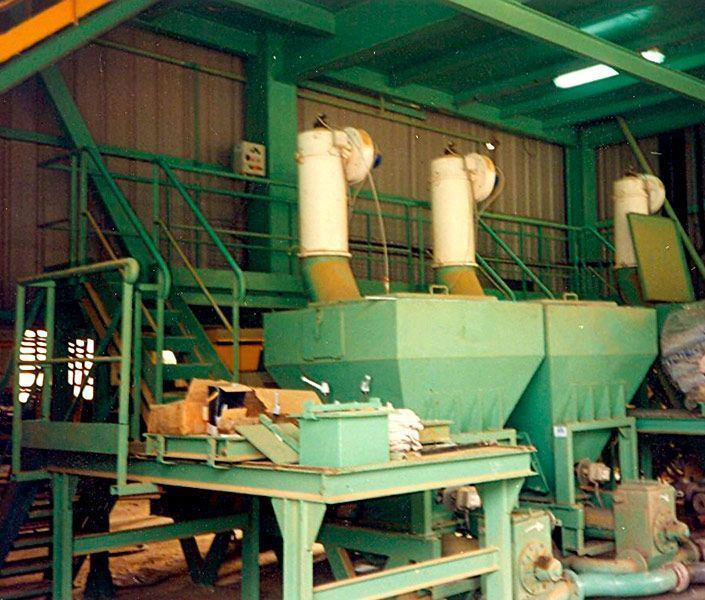
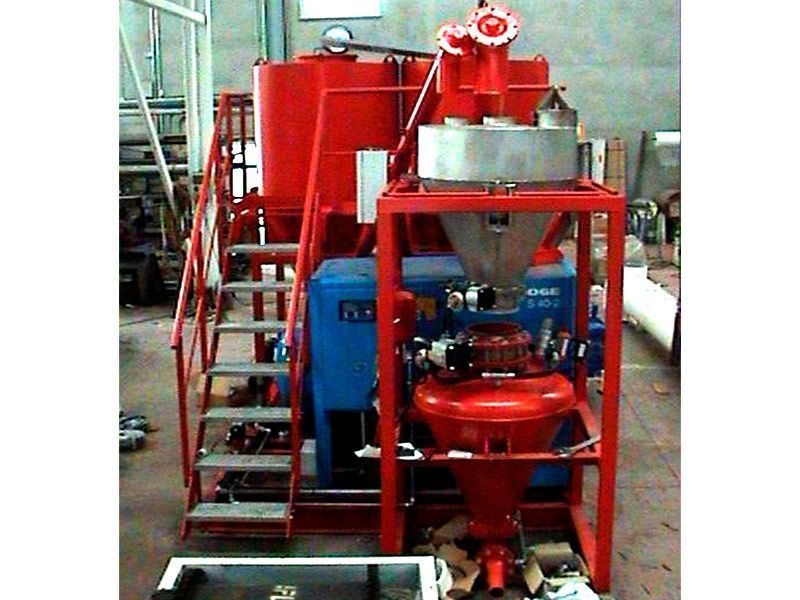
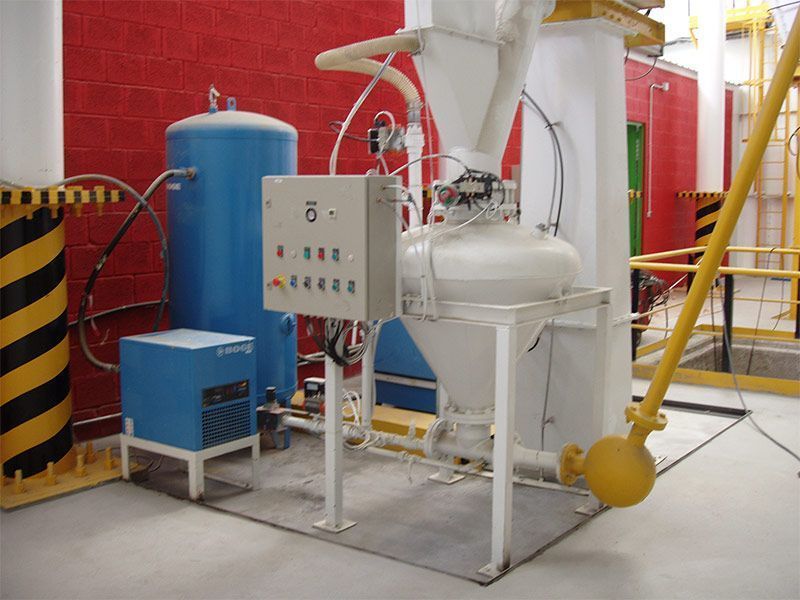
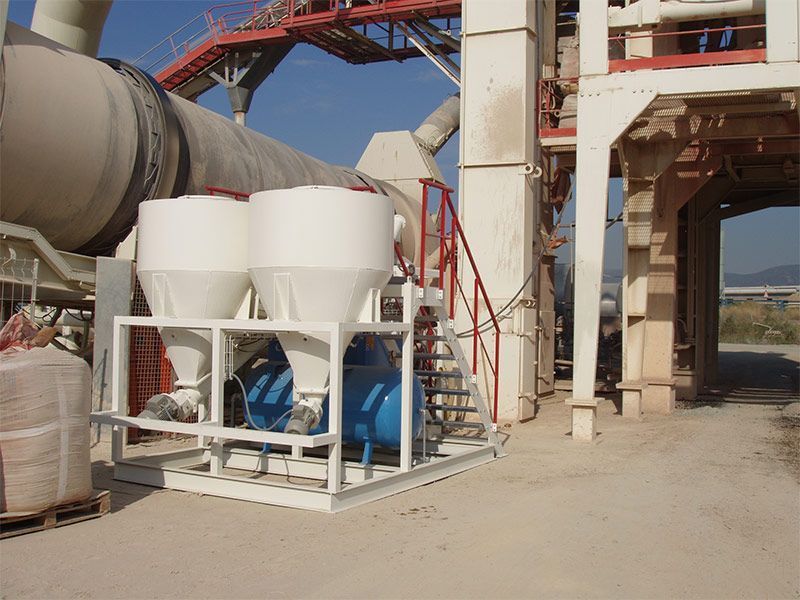
SOTECMA designs, manufactures and installs pneumatic conveying systems operating in both vacuum and pressure modes, using either dilute-phase or dense-phase conveying, with each solution tailored to the characteristics of the material and the specific requirements of the industrial process.
We provide everything from complete engineering design to the supply of individual equipment or fully integrated turnkey installations, ensuring maximum efficiency, reliability and safety in bulk solids conveying.
The performance of a pneumatic conveying system depends mainly on the design of the conveying line, as well as on the equipment selected for its implementation. SOTECMA has extensive experience in this type of conveying system and even manufactures many of the components used.
For the proper design of a pneumatic conveying line, it is essential to know the product and each and every one of its characteristics: particle size, density, moisture content, abrasiveness, etc.
En fonction de la pression du gaz utilisé pour transporter le solide, les systèmes de transport pneumatique sont classés comme suit :
- Transport à basse pression : il peut être réalisé aussi bien en pression positive qu'en dépression. La plage de fonctionnement est comprise entre -50 mbar et 50 mbar.
- Transport à moyenne pression : comme le transport à basse pression, il peut être réalisé en pression positive ou en dépression. Les plages de fonctionnement sont comprises entre 50 mbar et 800 mbar pour le transport en pression, et entre -900 mbar et -50 mbar pour le transport en dépression.
- Transport à haute pression : il ne peut être réalisé qu'en pression positive. La plage de fonctionnement est comprise entre 1 bar et 6 bars.
Every pneumatic conveying system consists of four main elements or sections:
Pressure Generation Unit
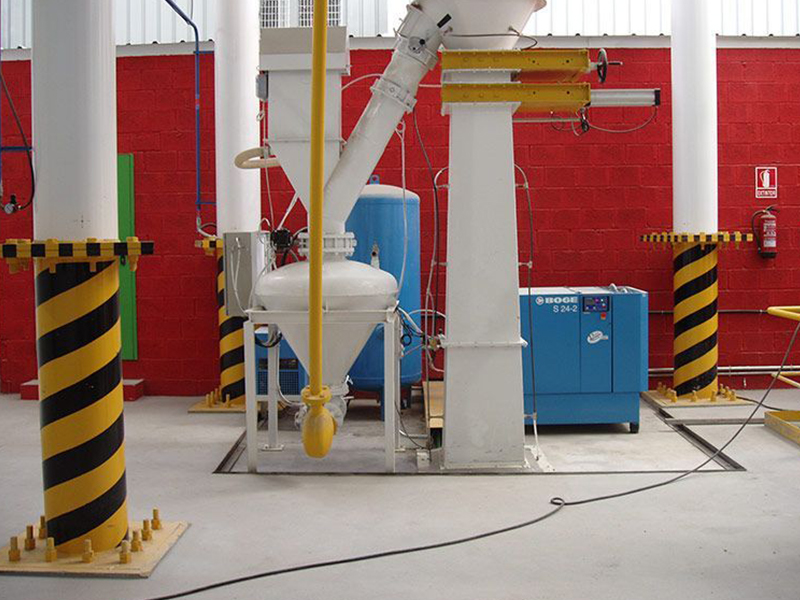
This is the main component of the pneumatic conveying system, as it provides the energy required to move the conveying gas and, consequently, the bulk solid being transported. The equipment used for this purpose includes fans, blowers and compressors. The selection depends on the type of conveying system to be implemented.
Solid Feeding Device
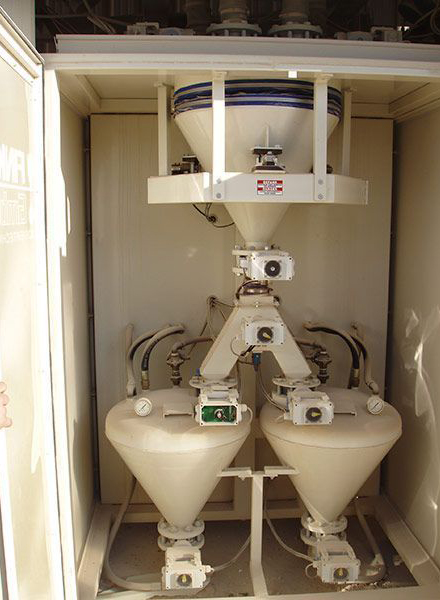
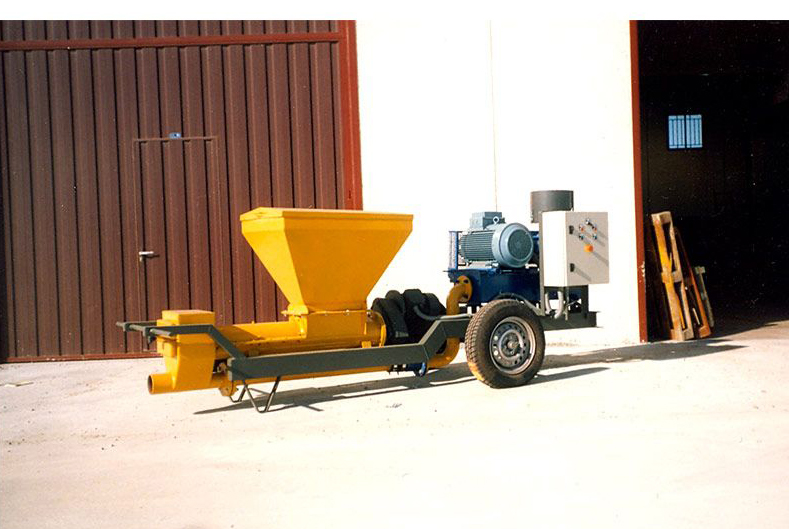
This component introduces the solid material into the conveying line. It is at this point that energy is transferred to the material when it comes into contact with the conveying gas. Selecting the correct feeding device is essential to ensure both the required solids flow rate and system airtightness. Typical equipment includes rotary valves, pressure vessels, Venturi feeders, screw conveyors, etc.
Conveying Elements
These mainly consist of the pipelines and fittings through which the gas-solid mixture flows. Their selection should take into account the conveying capacity, operating pressure, abrasiveness of the material being conveyed, possible chemical attack and other process conditions. Particular attention must be paid to bends, junctions and any component involving changes in direction or intersections within the conveying line.
Solid-Gas Separation Section
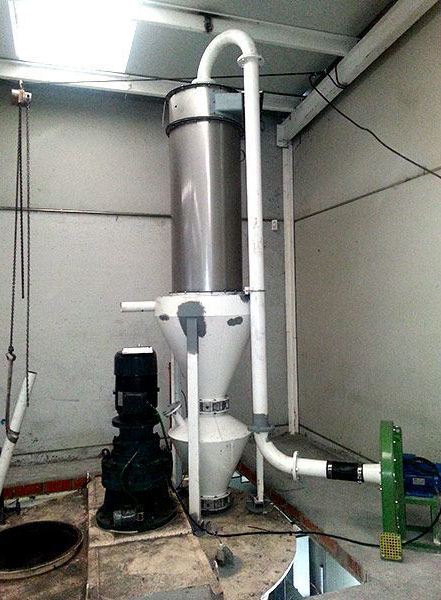
Once the conveying process has been completed, the solid material must be separated from the conveying gas. This allows the conveyed product to be recovered and, where appropriate, the conveying gas to be reused, while preventing dust-laden air from being released into the atmosphere. The equipment typically installed in this section consists mainly of cyclones and filters.
According to the concentration of solids relative to the conveying gas, a pneumatic conveying system can also be classified as:
- Dense-phase conveying: when the ratio between the mass of solids and the mass of conveying gas exceeds 15. In this type of conveying, the solids concentration is high enough for the material to move in plugs or dunes at a relatively low velocity, thereby reducing pipe abrasion. In addition, the higher solids concentration allows a smaller pipe diameter to be used for the same solids mass flow rate.
- Dilute-phase conveying: in this type of conveying, the solids-to-gas mass ratio is below 15. The conveying velocity is higher, resulting in increased wear when handling abrasive materials and requiring a larger pipe diameter for the same solids mass flow rate. It is used for relatively low conveying capacities and for products that cannot be subjected to high pressure.
At SOTECMA, we have extensive experience in high-pressure pneumatic conveying systems using pressure vessels and medium-pressure systems using blowers, operating in both pressure and vacuum conveying modes. These systems are mainly used for conveying additives after they have been dosed. Low-pressure systems are used only for dust extraction applications.