
 ES
ES  EN
EN  FR
FR 
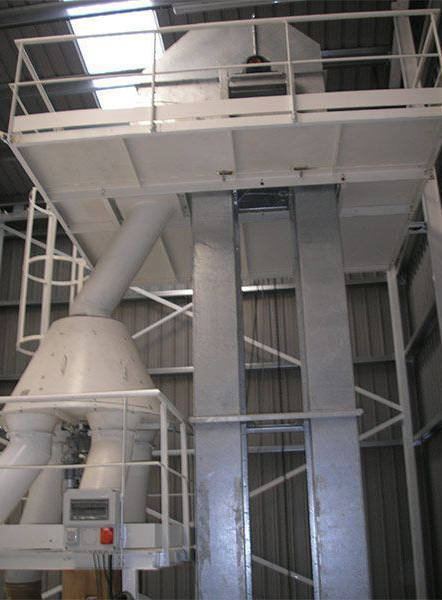
Within SOTECMA's range of equipment for the conveying, handling and manipulation of bulk solids are bucket elevators, also known as vertical elevators.
This equipment, widely used in primary and secondary industries, is designed with a standardised modular structure for the vertical conveying of bulk materials, both dry and wet. It is the ideal solution when a conventional conveyor is insufficient, where there is an excessively steep incline or where significant lifting heights are required.
How does a bucket elevator work?
The operating principle of a bucket elevator is simple and efficient, making it one of the most widely used vertical conveying systems in industry.
- Bulk material is fed into the inlet hopper.
- The buckets collect the material either directly from the hopper or by means of a continuous dredging system.
- The buckets are lifted by a conveyor belt to which they are attached. This belt is driven by a geared motor, transporting both the buckets and the bulk material to the top of the equipment.
- Once the discharge point is reached, the material is discharged by the centrifugal force generated during the rotation of the belt, thus completing the conveying process.
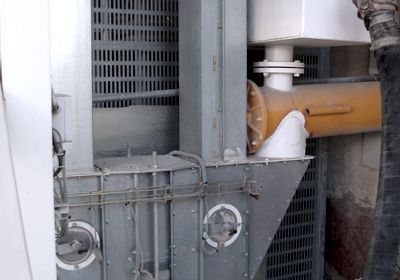
SOTECMA offers Heavy Duty bucket elevators specially designed for the vertical lifting and conveying of hard and highly abrasive minerals.
These machines feature a low-speed design and are manufactured from heavy-gauge steel plate. They are equipped with high-strength conveyor belts, bearings and buckets, specifically selected to withstand the demanding operating conditions of this type of application. Drive is provided by a direct-drive geared motor.
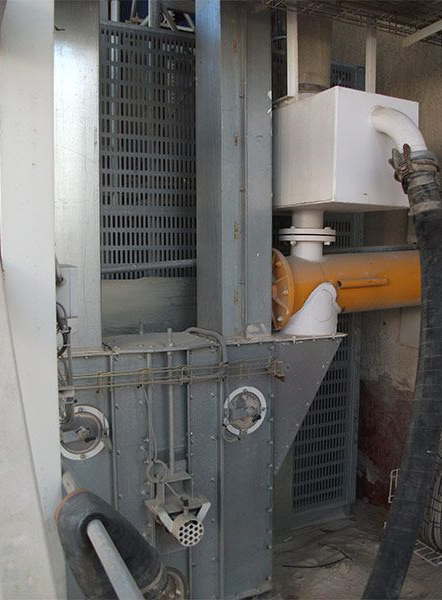
In addition, the elevators can be equipped with inspection and maintenance doors, belt rotation and misalignment monitoring systems, dust collection systems and a wide range of optional features to meet the requirements of each installation.
We also offer bucket elevators for medium-duty applications, equipment specially designed for conveying high-temperature materials, as well as versions manufactured in compliance with the ATEX Directive for potentially explosive atmospheres.
These machines are commonly used in dry mortar production plants, mineral processing plants, dry special sand processing plants, concrete plants, and installations handling gypsum, lime, cement and other powdered or granular materials.
In addition, SOTECMA supplies a comprehensive range of accessories and spare parts for bucket elevators, compatible with both our own equipment and existing bucket elevators.
Main components of a bucket elevator
A bucket elevator consists of a number of components that ensure the efficient, safe and reliable vertical conveying of bulk materials:
- Buckets: these are the containers used to convey the material. They are manufactured from different materials, such as carbon steel, stainless steel or nylon, depending on the product characteristics and the application. Depending on the material being conveyed, buckets may be:
- Deep buckets: recommended for heavy, abrasive or sandy materials.
- Shallow buckets: suitable for damp materials or materials with a tendency to cake.
- Scale-type buckets: with a flat bottom, used in gravity discharge bucket elevators.
- Traction element: the component responsible for connecting, guiding and transmitting movement to the buckets. It is generally made up of steel chains, available in different configurations (single, double or special) depending on the load and operating conditions.
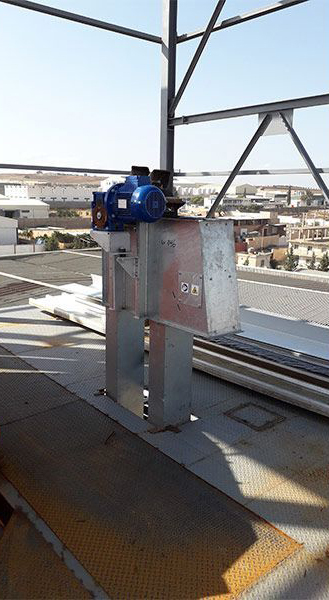
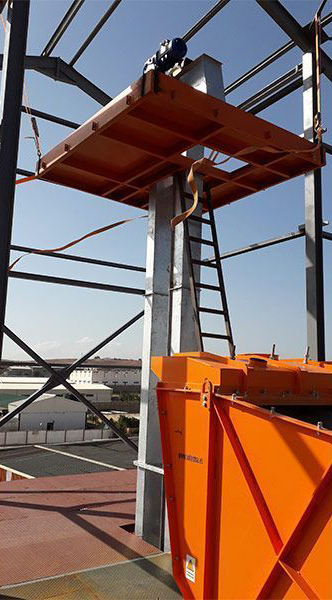
- Drive components: assembly located at the top of the elevator that transmits movement to the traction system. It consists of the drive wheel, upper shaft, bearings, B-Loc locking system and protective elements.
- Take-up unit: assembly located at the bottom of the elevator incorporating the pulley or sprocket responsible for maintaining the correct tension of the traction system. Its design varies according to the type of chain and the load to be supported.
- Boot section: also known as the boot, it forms the lower section of the bucket elevator where the material is fed into the equipment. Different configurations are available depending on the loading system and application.
- Head section: assembly located at the top of the elevator, comprising:
- Upper head: protects the internal components of the equipment.
- Lower head: supports the upper shaft assembly and drive components.
- Casing: steel structure that joins all the elevator components together and protects the system against dust, water and external agents.
- Geared motor: drive system that provides the power required for the operation of the bucket elevator. It generally consists of an electric motor coupled to a speed reducer, sized according to the equipment capacity and operating conditions.