
 ES
ES  EN
EN  FR
FR 
Impact Crushers
Impact crushers are crushing machines that use the energy generated by high-speed impacts to reduce material size. Their operating principle consists of accelerating the feed material and projecting it at high speed against heavy-duty impact plates, causing the rock to fracture into smaller particles.
These machines are particularly suitable for secondary and tertiary crushing applications, featuring a Heavy Duty design capable of processing medium- and high-hardness minerals as well as highly abrasive materials.
Types of Impact Crushers
SOTECMA manufactures both Vertical Shaft Impact (VSI) and Horizontal Shaft Impact (HSI) crushers for aggregate production and industrial mineral processing applications.
Vertical Shaft Impact Crushers (VSI)
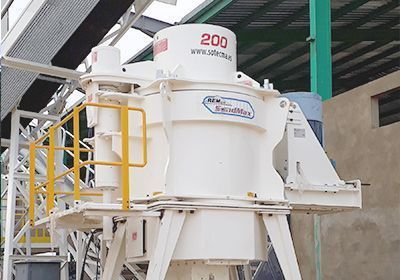
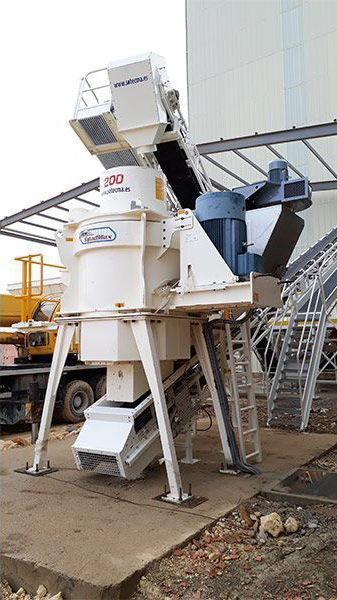
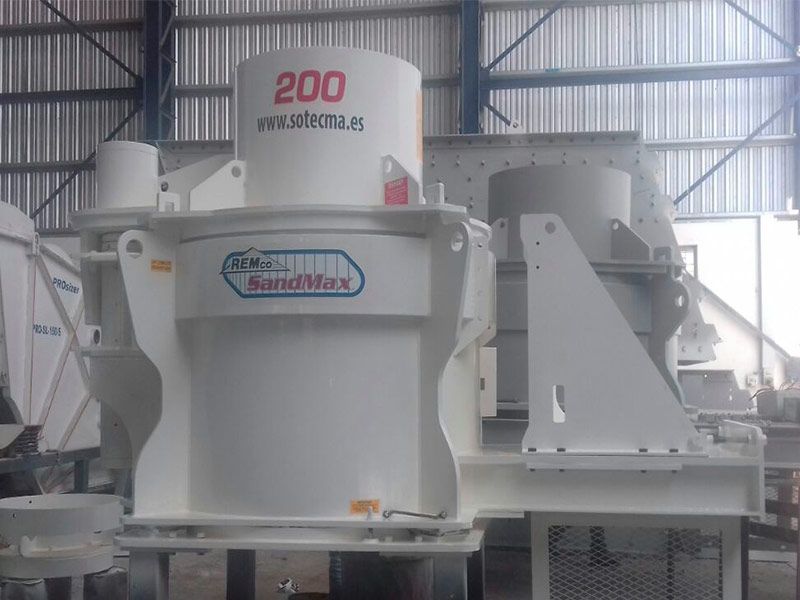
VSI crushers feature a vertically mounted rotor into which the feed material is introduced. As the rotor rotates at high speed, the material is accelerated and thrown against anvils or impact plates located around the crushing chamber.
A second configuration allows rock-on-rock crushing, where the accelerated material impacts against a chamber lined with the same material being processed, significantly reducing wear on metallic components.
The product size of a VSI crusher is controlled by adjusting the rotor speed.
Horizontal Shaft Impact Crushers (HSI)
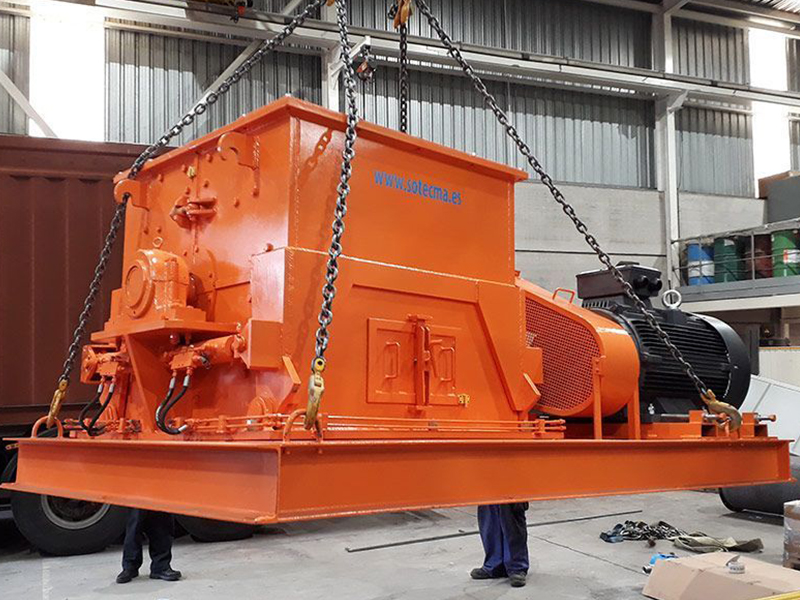
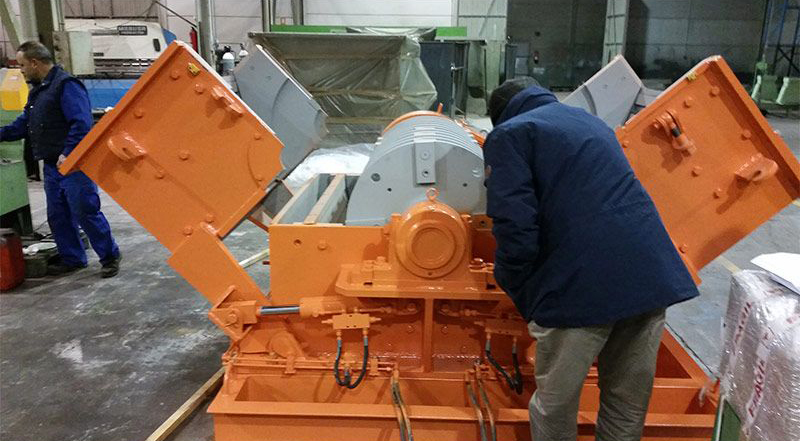
HSI crushers incorporate a horizontal rotor fitted with blow bars. The feed material strikes these blow bars and is projected at high speed against impact plates mounted inside the crushing chamber, where the crushing process takes place.
The crusher setting is adjusted by changing the distance between the blow bars and the impact plates, allowing precise control of both product size and production capacity.
Features and Specifications
SOTECMA impact crushers are designed to deliver high production capacities and excellent product quality, adapting to different crushing stages and processing requirements.
- Maximum feed size of up to 300 mm for secondary crushers and 70 mm for tertiary crushers.
- Final product size of up to 70 mm in secondary crushing and approximately 12 mm in tertiary crushing.
- Production capacities of up to 400 t/h for secondary crushers and up to 150 t/h for tertiary crushers.
- Particularly suitable for the production of high-quality manufactured sand and aggregates with excellent particle shape.
How Does an Impact Crusher Work?
The operating principle of an impact crusher is simple and highly efficient. The material enters the crushing chamber, where the rotor accelerates it and propels it at high speed against the impact plates or anvils, causing it to fracture through impact.
Particles that have already reached the required size are discharged through the outlet opening, while oversized material remains inside the crushing chamber until the desired particle size is achieved. The final product size is adjusted by changing the position of the impact curtains in HSI crushers or by modifying the rotor speed and crushing chamber configuration in VSI crushers, allowing rapid adaptation to different production requirements.
The main components include the rotor, blow bars and impact plates in HSI crushers, or the rotor, anvils and crushing chamber assembly in VSI crushers. Hydraulic opening systems provide easy access for inspection, maintenance and wear part replacement, minimizing plant downtime.
When processing low- to medium-abrasive materials such as limestone, dolomite or construction and demolition waste (C&D waste), impact crushers provide an excellent balance between reduction ratio, particle shape and operating costs.