
 ES
ES  EN
EN  FR
FR 
What Is a Screw Conveyor?
A screw conveyor, also known as an auger conveyor or helical conveyor, is a mechanical device designed for the conveying and dosing of bulk solid materials. Its operating principle is based on a rotating helical screw (Archimedes' screw) enclosed within a trough or tube, continuously moving material from one point to another.
It is one of the most versatile conveying systems used in industry, capable of handling materials such as cement, sand, lime, gypsum, minerals, cereals and powdered chemical products. Thanks to its compact design and its ability to operate both horizontally and at an incline, it provides an efficient solution for a wide range of industrial applications.
How Does a Screw Conveyor Work?
The operating principle of a screw conveyor is simple and highly efficient:
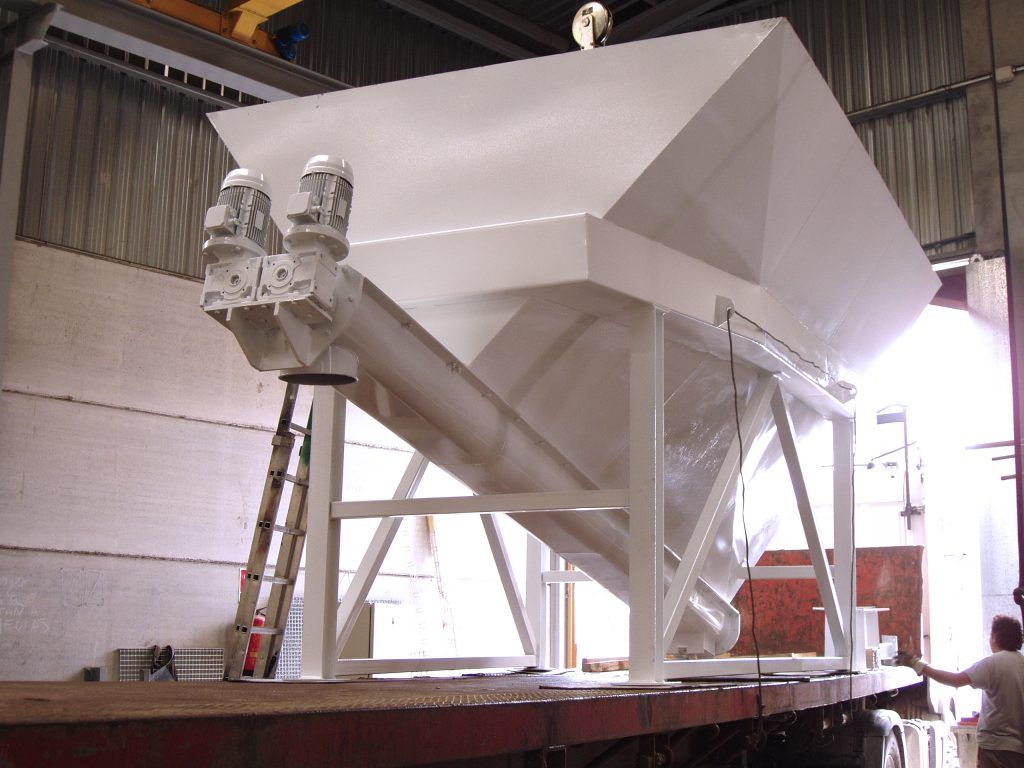
- Motor and gear reducer: the drive unit rotates the screw shaft, controlling the rotational speed and, consequently, the material flow rate.
- Helical screw: as the screw rotates inside the conveyor, it moves the material towards the discharge point. The screw pitch determines the conveying capacity.
- Trough or tube: the material is conveyed inside either an open trough or a closed tube, depending on the conveyor design and the application requirements.
- Inlet and discharge points: the material enters through the feed hopper and is discharged at one or more outlet points located along the conveyor, according to the process requirements.
By adjusting the screw rotational speed, the material flow can be accurately controlled, making this equipment suitable for both conveying and precise dosing of bulk solids.
Types of Screw Conveyors
There are different screw conveyor configurations, each designed to meet specific application requirements.
Tubular Screw Conveyor
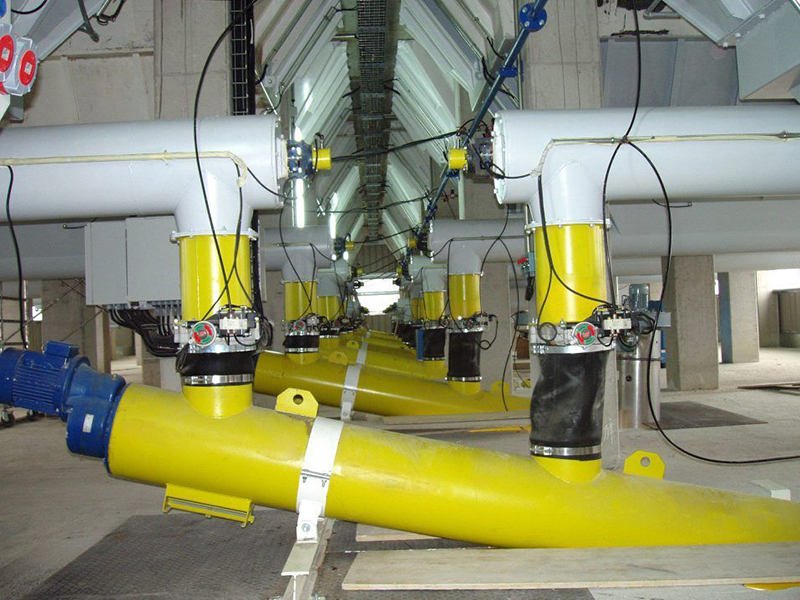
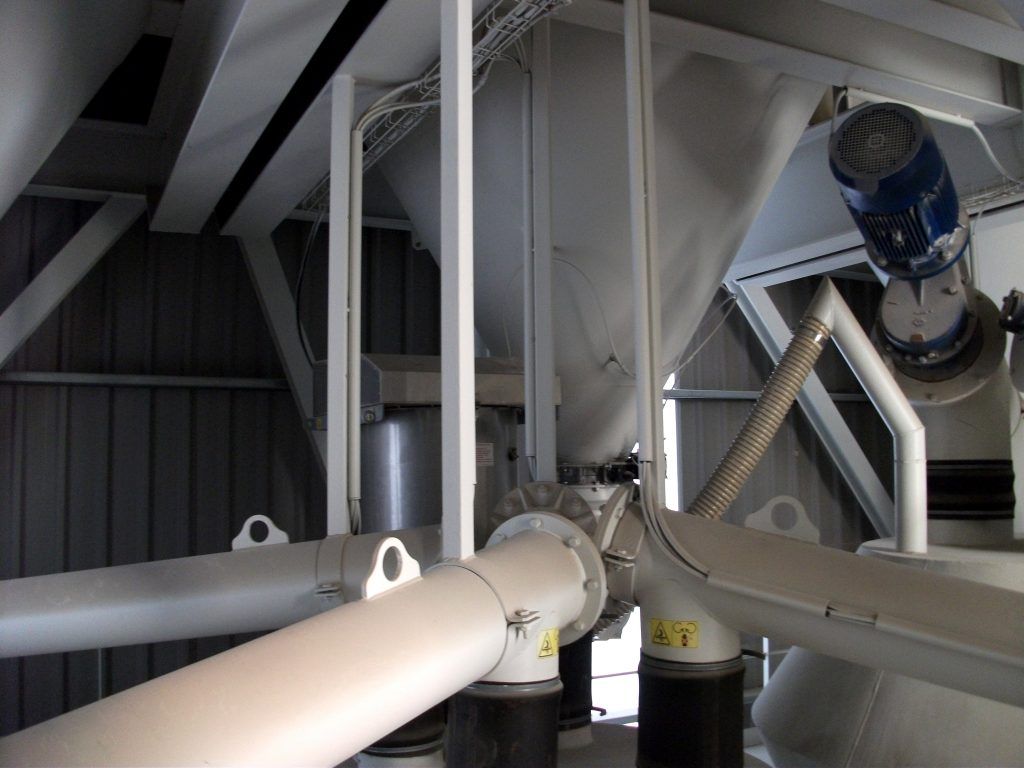
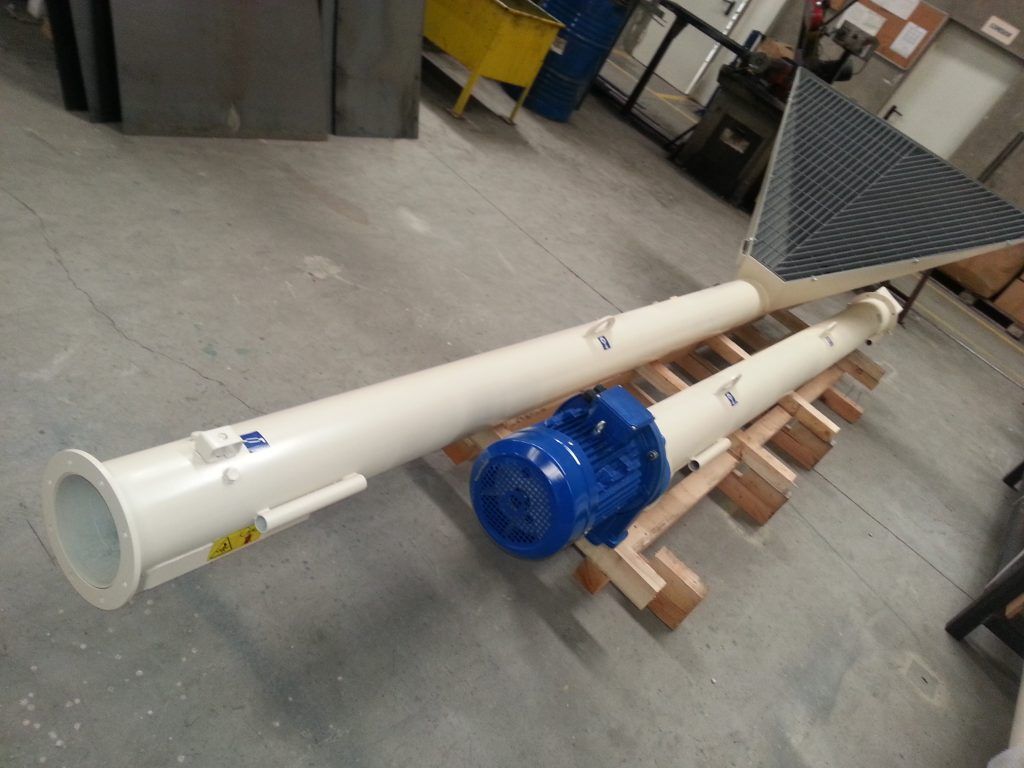
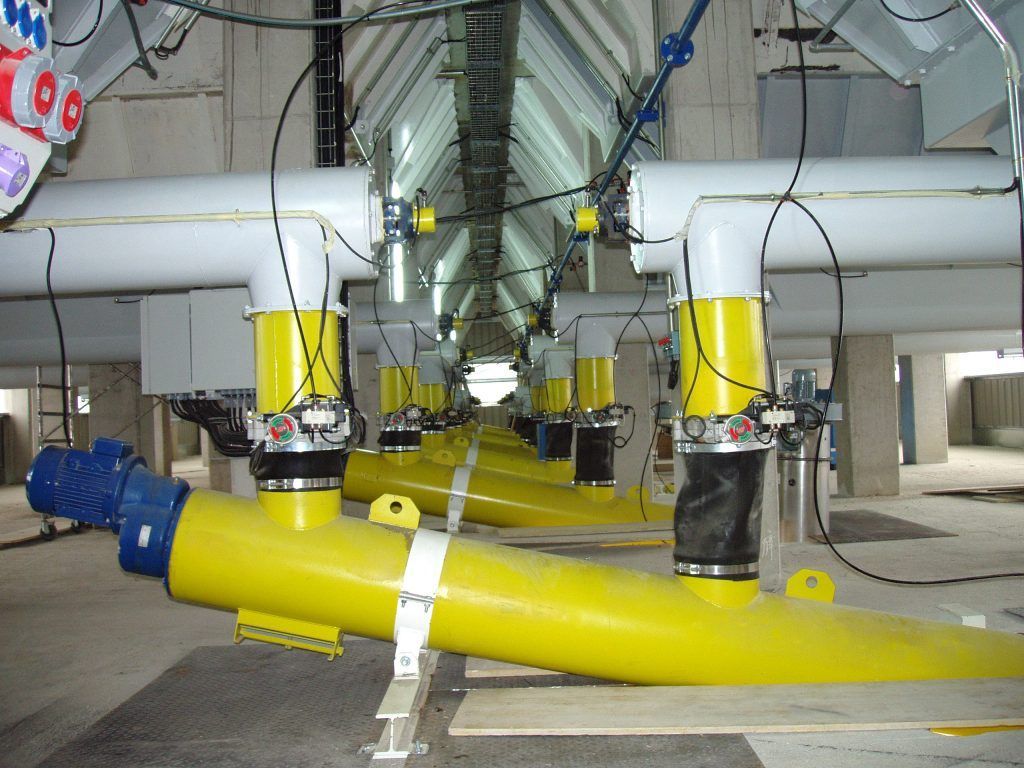
This fully enclosed design houses the screw inside a cylindrical tube. It is the ideal solution for conveying powdered materials that require a high level of sealing, such as cement, lime or ash, preventing both product contamination and dust emissions into the environment.
Open Trough Screw Conveyor
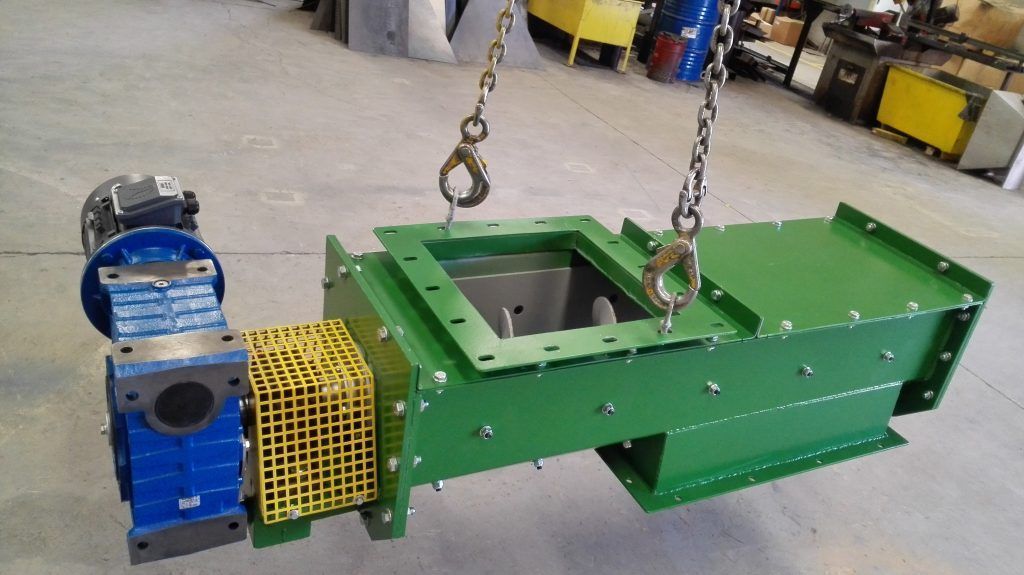
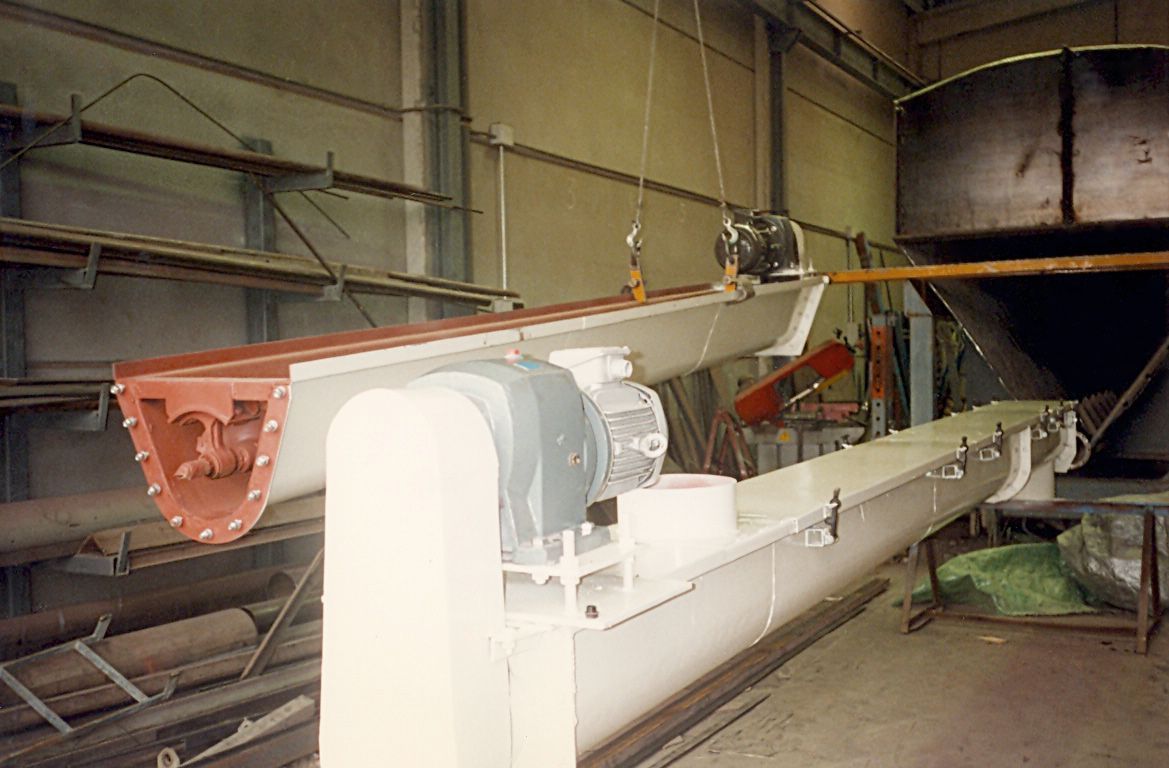
The screw is housed inside a U-shaped trough fitted with removable top covers, allowing easy inspection, cleaning and maintenance. This is the most common configuration for conveying granular or non-powdered materials.
Vertical Screw Conveyor
Designed to elevate materials between different levels of a plant. Due to its configuration, it requires higher rotational speeds and greater power to maintain the upward flow of material, making it particularly suitable where horizontal space is limited.
Flexible Screw Conveyor
This type of conveyor incorporates a flexible spiral housed inside a curved tube, allowing non-linear conveying paths and changes in direction. It is an ideal solution for installations with limited space or complex layouts.
Industrial Applications
Thanks to its versatility, screw conveyors are widely used across a broad range of industrial sectors.
Construction Industry
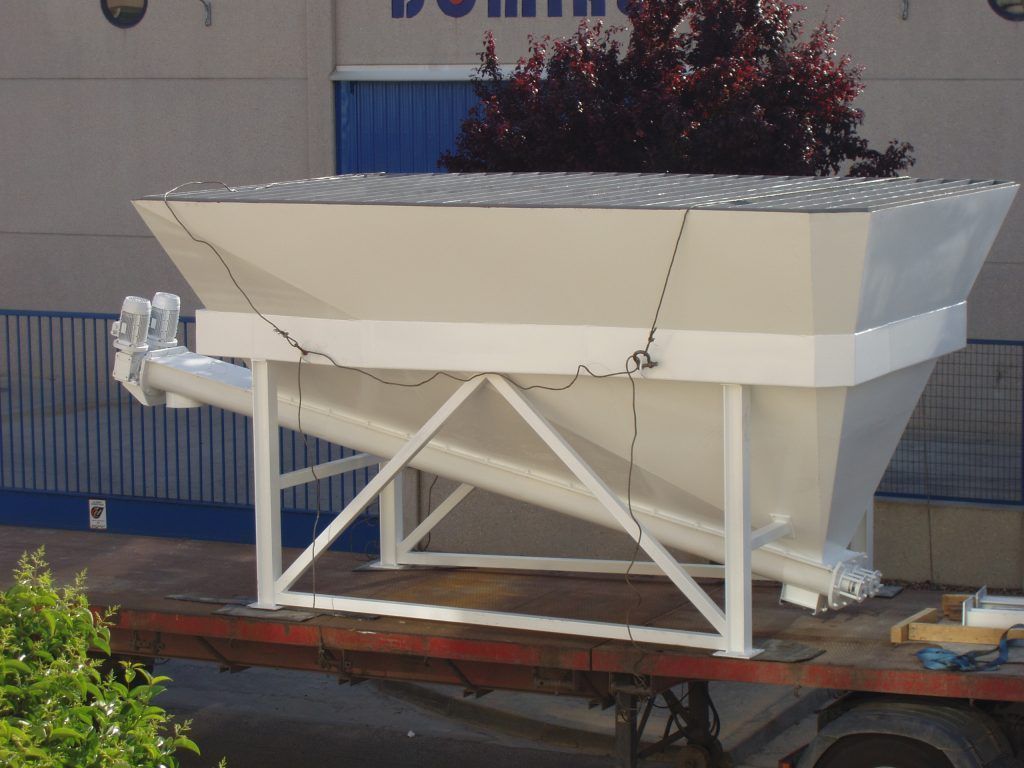
In concrete batching plants, dry mortar plants and other construction material facilities, these conveyors provide continuous conveying and precise dosing of cement, sand, lime, gypsum and aggregates to mixers, silos and weighing systems.
Mining and Mineral Processing
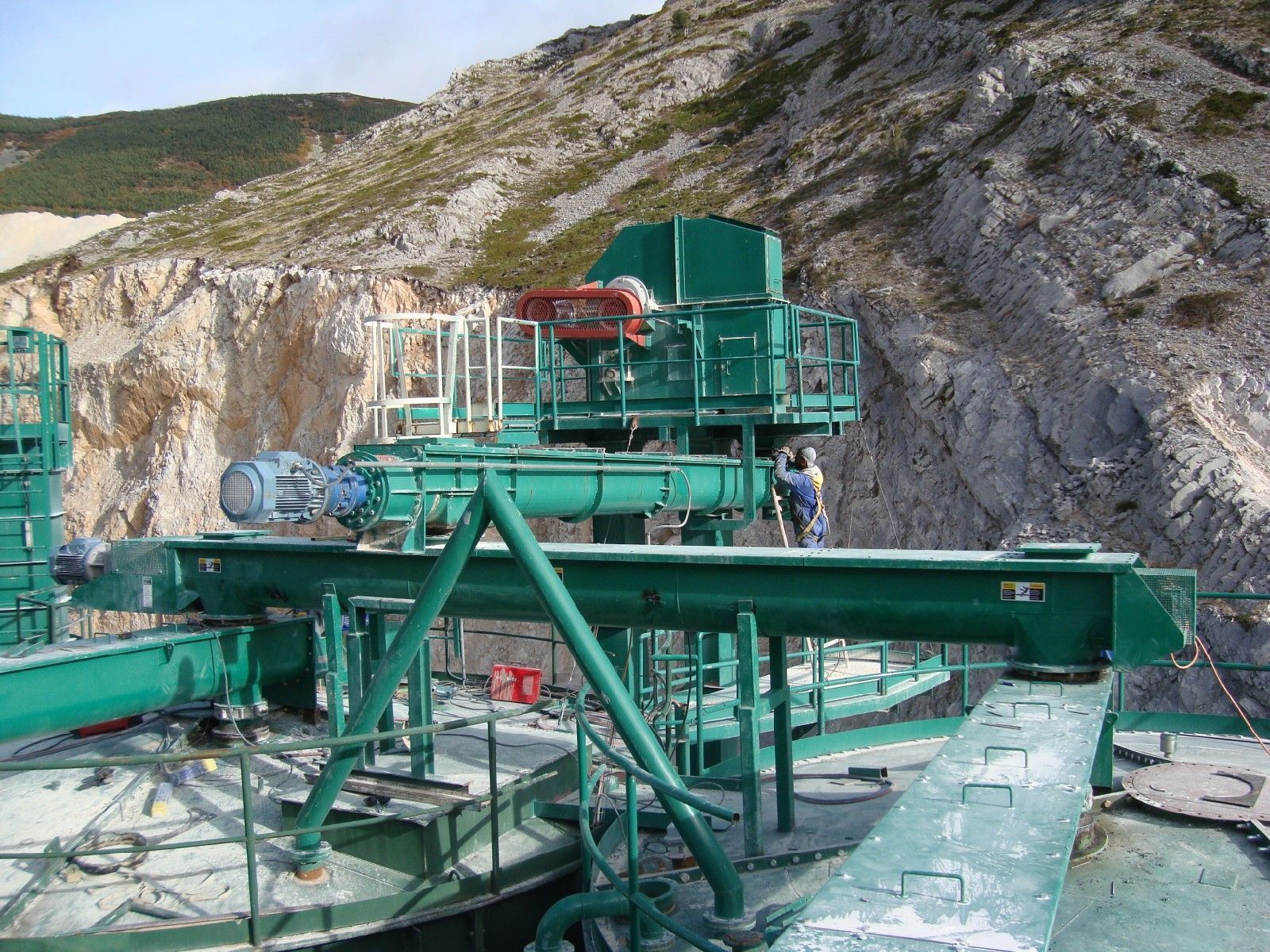
In the mining and mineral processing industries, screw conveyors transport crushed minerals, concentrates and abrasive materials between different stages of the process, ensuring a continuous flow and controlled feeding.
Food and Chemical Industries
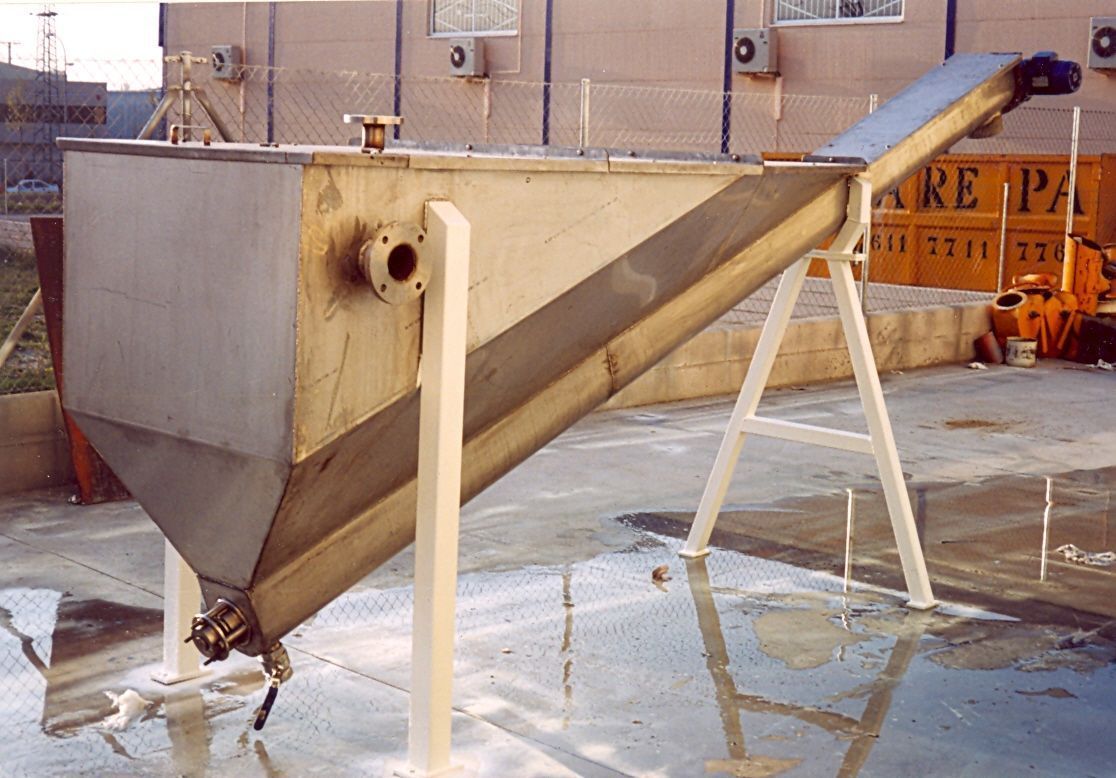
In the food and chemical industries, particularly where high hygienic standards are required, stainless steel screw conveyors safely and cleanly handle flour, cereals, spices and powdered chemical products under controlled conditions.
Advantages and Limitations of Screw Conveyors
| Advantages | Limitations |
|---|---|
| Compact design and low installation cost. | Screw wear when handling abrasive materials. |
| Accurate dosing capability. | Limited conveying length (typically up to 40 m). |
| Dust-tight conveying (tubular design). | Not suitable for fragile or oversized materials. |
| Can operate horizontally, inclined or vertically. | Higher energy consumption in vertical conveying applications. |
| Low maintenance requirements. | Risk of clogging with very wet or sticky materials. |
| Easy integration with weighing and dosing systems. | Limited conveying speed. |
SOTECMA Screw Conveyors
At SOTECMA, we specialise in the design, manufacture and installation of screw conveyors tailored to the requirements of each project. With more than 30 years of experience in bulk solids handling, we provide customised solutions for virtually every industrial sector.
Our screw conveyors can be integrated into complete installations together with other conveying equipment, enabling the development of continuous material handling systems. They are frequently combined with belt conveyors for longer horizontal conveying distances, bucket elevators where greater vertical lifting heights are required, or dosing systems such as additive micro-feeders in processes demanding a high level of precision.
As a result, SOTECMA screw conveyors form part of complete conveying, weighing and dosing solutions specifically designed to meet the requirements of each industrial installation.